

As temperatures drop and daylight hours shorten, our homes naturally become the center of daily life. Transitioning your decor for the cooler seasons isn’t about running out to replace every piece of furniture or overcrowding shelves with temporary knick-knacks. True seasonal warmth comes from layering—a thoughtful design approach that builds depth through tactile fabrics, varied light sources, rich wood tones, and lived-in details.
Layering creates an environment that feels collected rather than styled overnight. It balances visual weight, introduces comforting textures, and allows room for personal accents that make a home feel inviting and deeply cozy. Whether you are refreshing an apartment living room or elevating a suburban family space, these 16 practical design strategies will help you cultivate an atmosphere of welcoming, quiet luxury this season.
Drapes Over Woven Shades
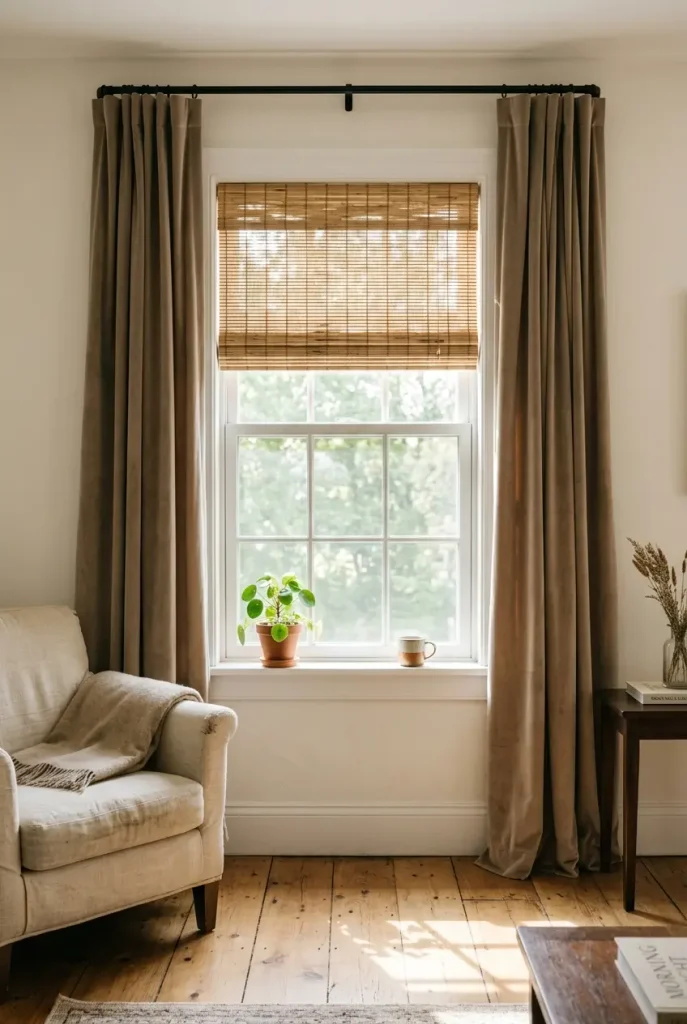
Combine tailored linen or velvet curtain panels with natural woven wood or bamboo roman shades to give windows a soft, architectural framing. The woven shades filter incoming light into a warm glow, while the heavy fabric panels stop cold drafts and add visual weight to the room’s perimeter.
Combine Chunky Knit and Smooth Leather Textiles
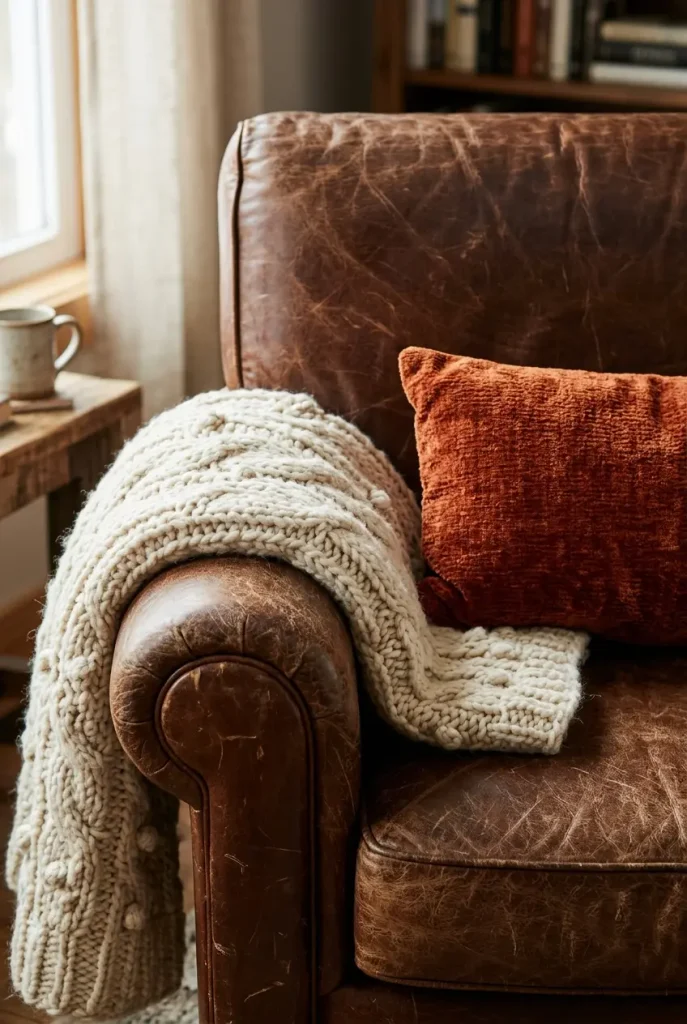
Contrast is key when creating a tactile experience. Pair a smooth, cognac leather sofa or armchair with an oversized, hand-knitted wool throw blanket and plush chenille pillows. The juxtaposition between the sleek, cool surface of the leather and the heavy, porous structure of the knit creates instant visual and physical warmth.
Mix Low-Level Practical Lighting
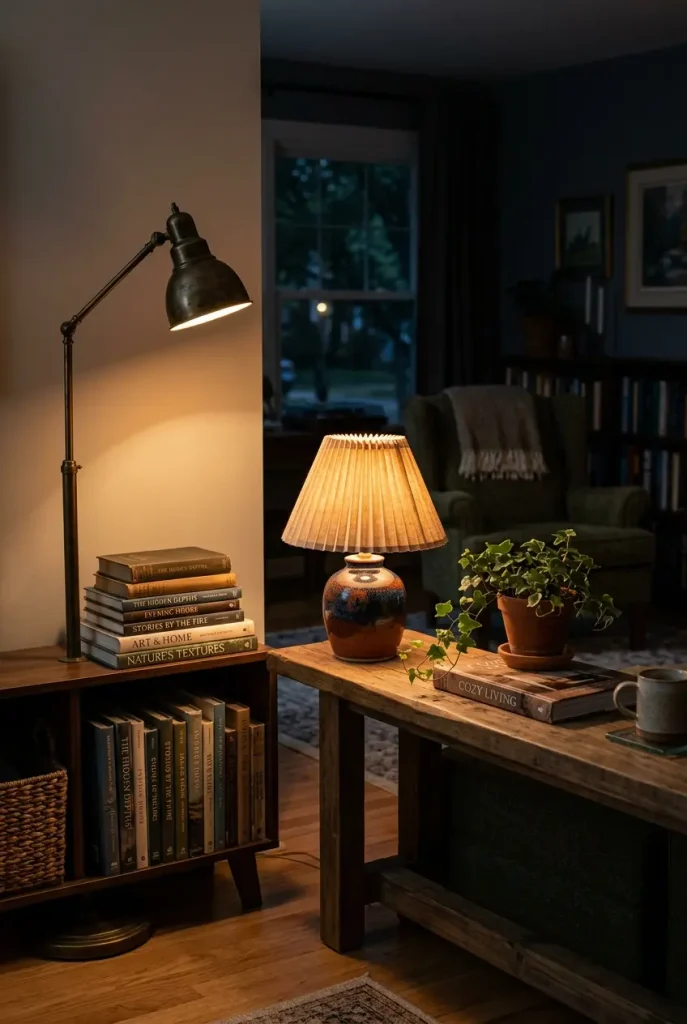
Avoid relying solely on bright overhead recessed lights in the evening. Instead, layer light at varying heights throughout the room using table lamps, floor lamps, and picture lights fitted with warm-toned LED bulbs (around 2700K). This creates soft pockets of illumination and gentle shadows, making large rooms feel instantly more intimate.
Layer a Patterned Vintage Wool Rug Over Natural Jute
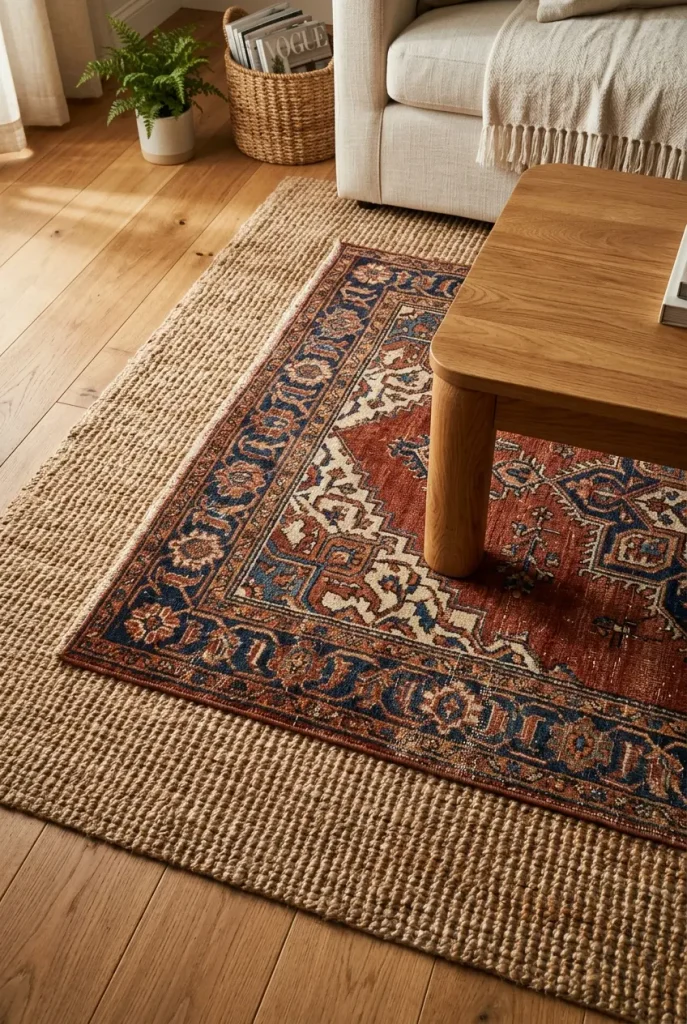
Ground a spacious seating area by placing a smaller, rich vintage or vintage-inspired patterned wool rug directly over a larger, neutral woven jute rug. The jute provides broad texture, durability, and visual boundary, while the wool rug adds color, intricate pattern, and underfoot softness where your feet naturally land.
Introduce Deep Honey and Walnut Wood Tones

If your home predominantly features pale, Scandinavian-style blond wood or white finishes, introduce darker wood elements like honey oak or walnut through small accent pieces. A walnut side table, vintage wooden bowls, or hand-carved picture frames bring grounding contrast that anchors a room during cooler months.
Style a Mantel with Staggered Heights and Dried Florals

Layer mantel decor by overlapping items of different heights and depths rather than lining them up in a single row. Place a large framed mirror or artwork against the wall, overlap the corner with a smaller framed print, and anchor the sides with tall stoneware vases holding tall dried eucalyptus, pampas grass, or bare branches.
Hang Plaid or Houndstooth Accent Throws
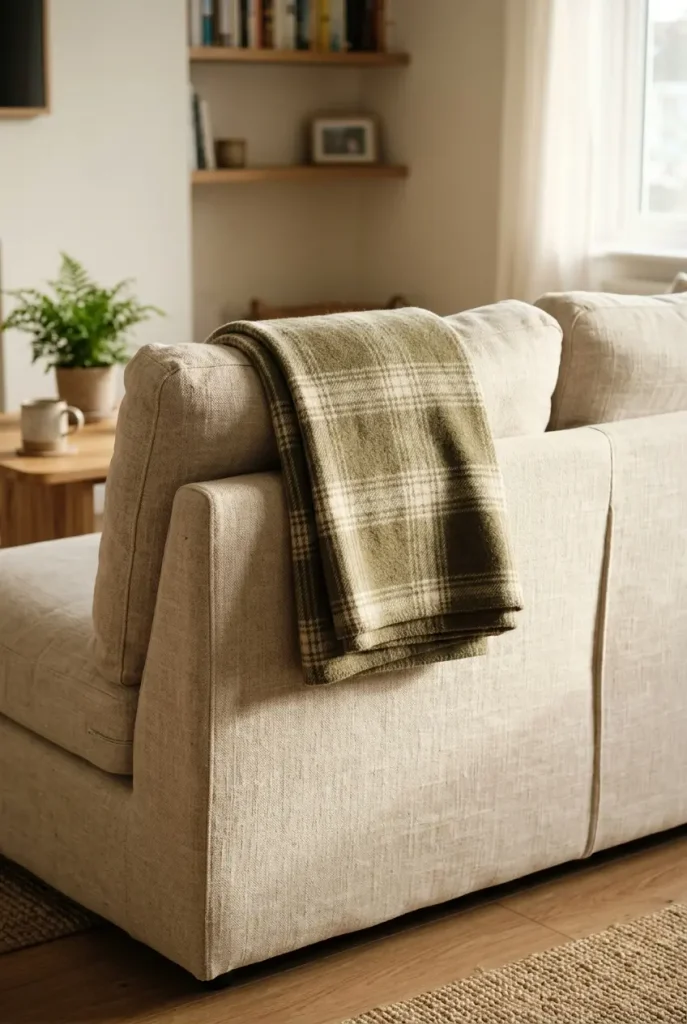
Subtle traditional patterns like glen plaid, houndstooth, or tartan instantly evoke seasonal comfort without feeling overwhelming. Draft a folded wool blanket featuring a muted olive, navy, or terracotta plaid over the back of a sectional or folded neatly on an entryway bench to break up flat solid colors.
Group Matte Ceramics with Metallic Accents
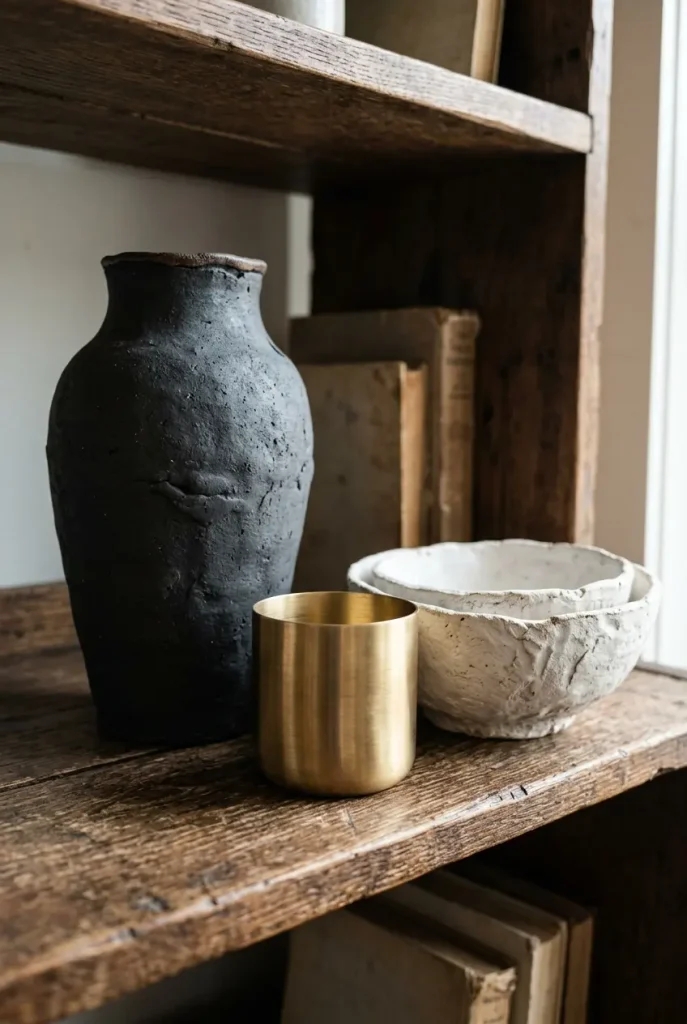
When styling open shelving or coffee tables, group objects with opposing surface finishes. Pair matte, unglazed stoneware ceramics or clay pots with aged brass candlestick holders or vintage copper bowls. The matte surfaces absorb light for a quiet effect, while the brushed metals reflect warm light accents around the room.
Upgrade to Woven Linen or Bouclé Pillow Covers
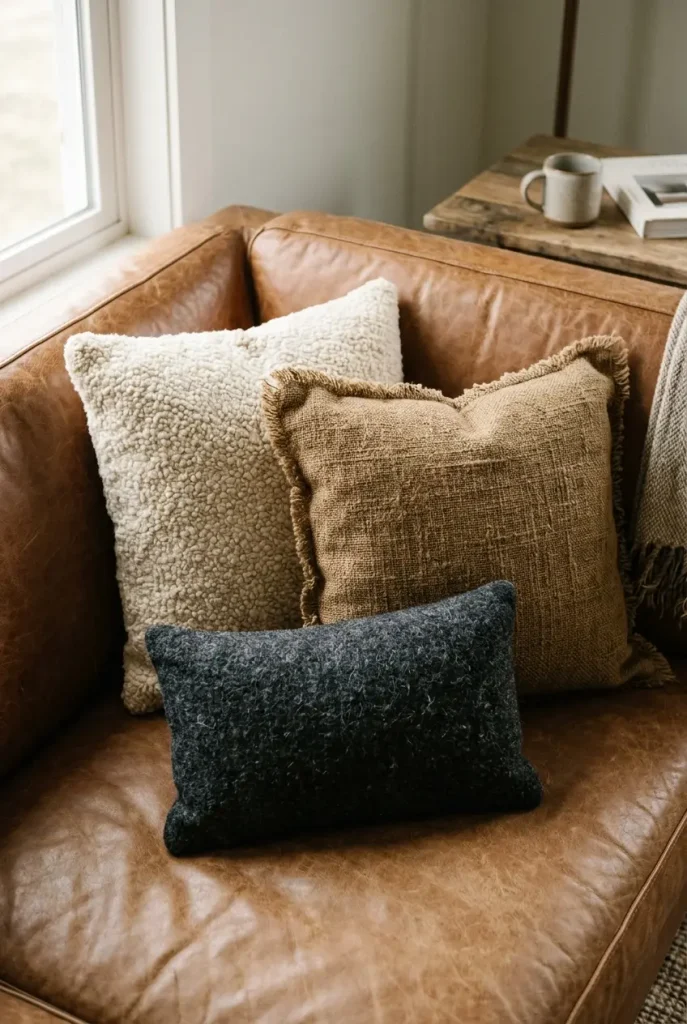
Swap out cool summer cotton or slick polyester pillow covers for warm, textured materials such as heavy woven linen, bouclé, or nubby wool blends. Mixing pillow textures within the same tonal color family—such as oatmeal, camel, and cream—adds rich tactile variation without cluttering the visual space.
Frame Moody, Nature-Inspired Art Landscapes

Replace bright abstract or coastal artwork with landscape prints featuring moody, muted natural sceneries—autumnal forests, hazy mountain vistas, or quiet countryside fields. Frame them in dark wood or antique gold frames with wide matting to create a focal point that reflects the changing outdoors.
Create a Stacked Coffee Table Book Arrangement
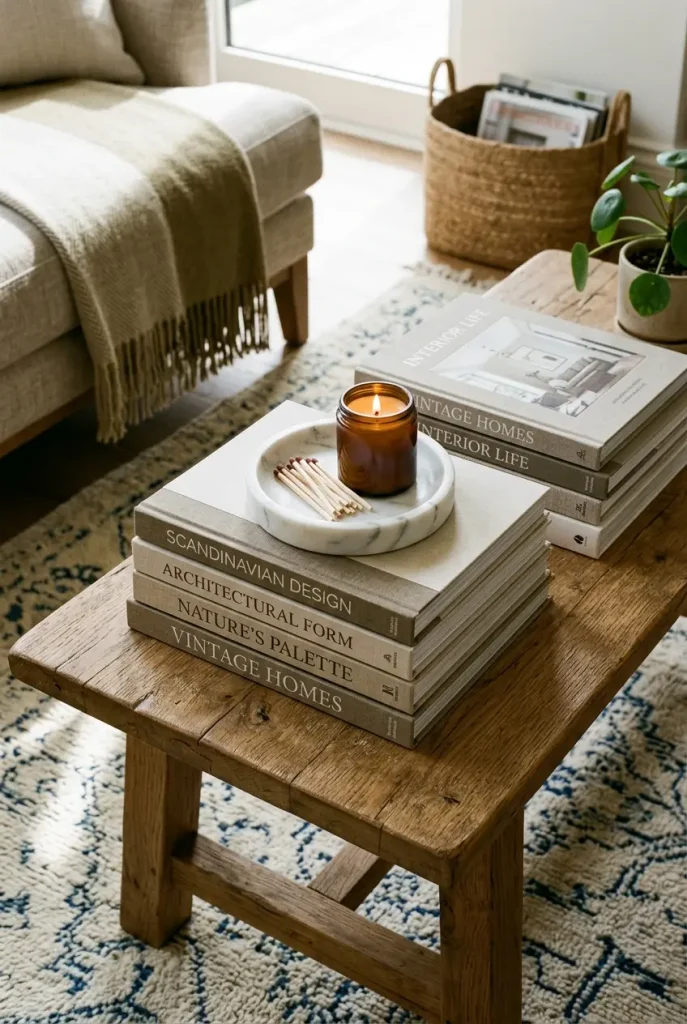
Coffee tables can feel cold when left bare. Create a warmer, more lived-in atmosphere by building low stacks of large art, architecture, or garden hardcover books. Layer small functional objects—like a small stone bowl for matchbooks or a brass magnifying glass—on top of the book stacks to add depth and interest.
Incorporate Architectural Board and Batten

Wall paneling like board and batten, beadboard, or picture frame molding creates permanent architectural shadows and texture that instantly elevates plain drywall. Paint the paneling in a rich, warm tone—like warm stone, sage green, or muted terracotta—to wrap the room in a cozy, cocoon-like atmosphere.
Add Layered Bedding with a Folded Duvet at the Foot
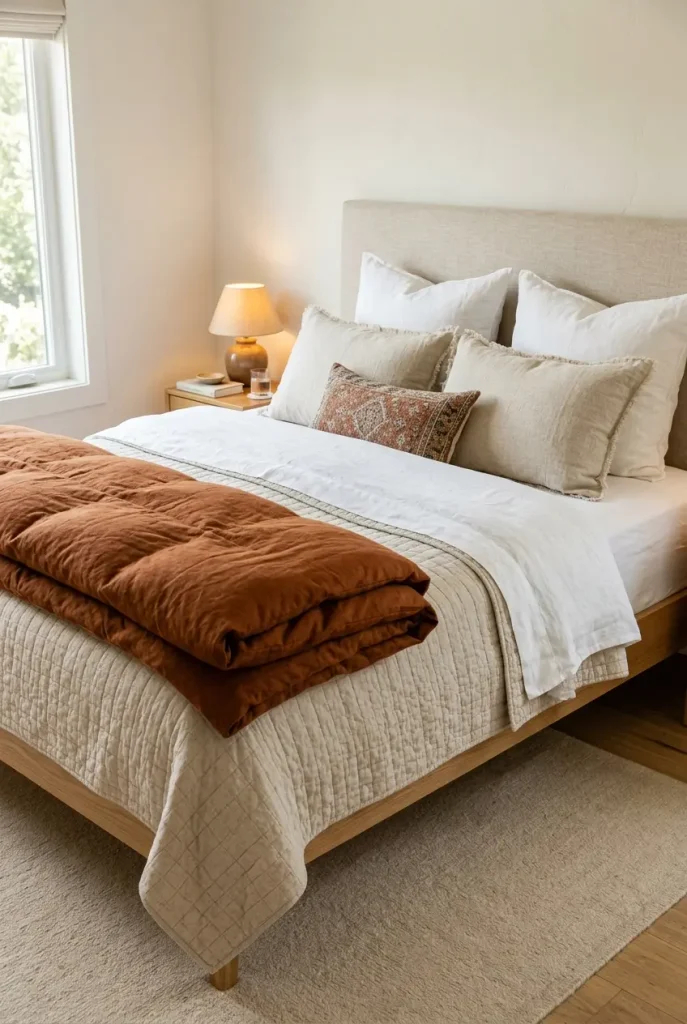
Instead of simply pulling a single bedspread up, layer bed linens in intentional tiers. Start with crisp cotton or linen sheets, add a medium-weight quilt or coverlet over the top, and top the setup with a plush duvet folded into thirds at the foot of the bed. This creates an inviting, hotel-quality aesthetic with functional warmth.
Style Dining Tables with Linen Runners and Taper Candles
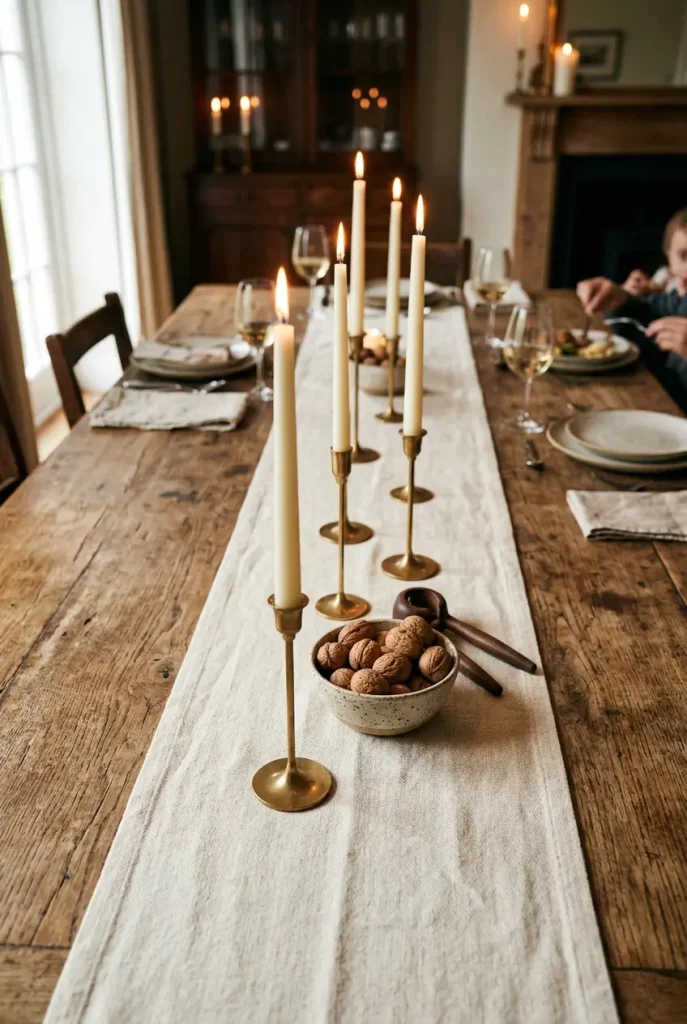
For everyday warmth on a dining table, drape a long, slightly crumpled natural linen table runner down the center. Group thin brass or ceramic candlestick holders at varying heights down the runner, fitted with tall, cream-colored taper candles that add height and elegant warmth during evening meals.
Place Burlap or Woven Storage Baskets Near Seating Areas
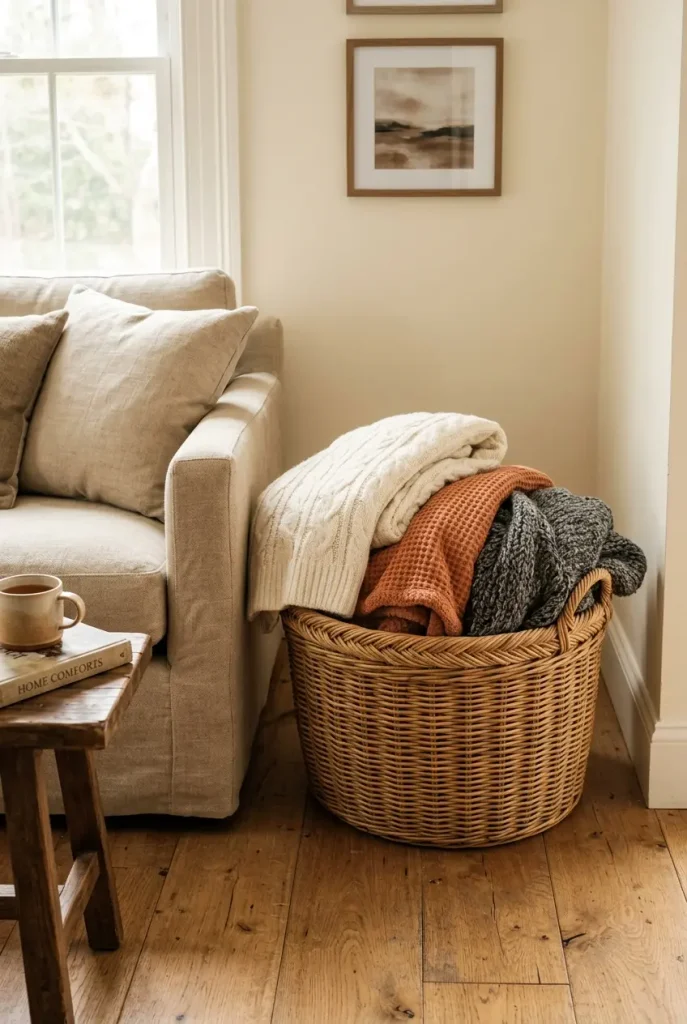
Keep extra throw blankets and accent pillows accessible while introducing natural organic texture. Place large, sturdy baskets woven from seagrass, rattan, or thick felt beside sofas, armchairs, or media consoles. Filling them with plush textiles prevents clutter while contributing to the layered look.
Soften Hard Flooring with Thick Wool Runner Rugs
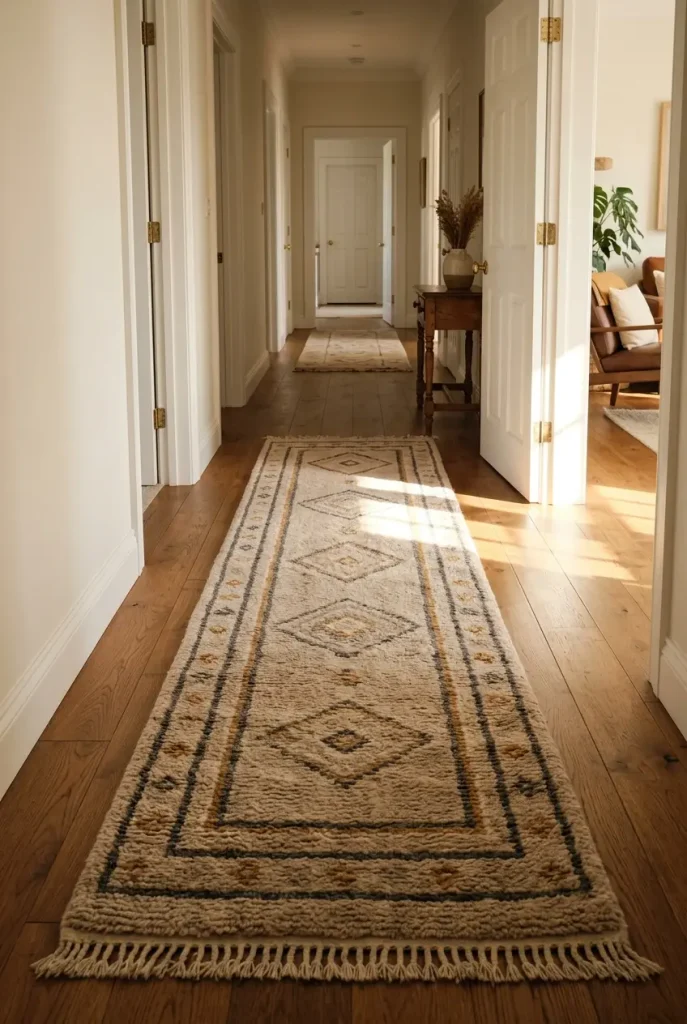
High-traffic transition areas like entryways, hallways, and kitchen work zones often feel cold due to hard flooring. Introduce a thick, hand-tufted wool runner rug featuring a subtle geometric or subtle traditional print. Wool naturally insulates against cold floorboards while adding comfort underfoot.